
"coffee introduction 19th century"
700 article(s) found

Rich fragrant Indonesian Java coffee flavor taste manor boutique coffee introduction
Indonesia is located in the Pacific earthquake belt, where thousands of large and small earthquakes occur every year. In 2006, several strong earthquakes occurred on the island of Java. On May 27, an earthquake measuring 5.9 on the Richter scale struck Yogyakarta and parts of Central Java province, killing more than 6000 people. On July 17, an earthquake measuring 6.8 on the Richter scale struck the Indian Ocean in southern Java and triggered a tsunami, causing heavy casualties. July nineteenth
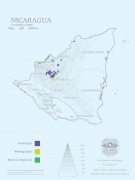
An introduction to the History of Nicaraguan Coffee
Nicaraguan coffee history introduces that Nicaragua began to grow coffee in the late 1800s, but it was not until the mid-19th century that it became an important export product. The increase in global demand for coffee (especially from North America) and the decline in supply in the Pacific islands have led to the steady development of the coffee market here. Around this time, the first batch appeared in the Managua region.

Introduction to the characteristics of coffee beans produced by grinding scale method in Jinchu Valley, Kenya
Grinding scale treatment of coffee beans in Jinchu Valley in Kenya characteristics of varieties in the legal production area introduced Ethiopia, the origin of Arabica coffee trees in the north of Kenya, but did not engage in coffee cultivation until the beginning of the 20th century. Missionaries introduced Arabica trees from Yemen in the 19th century, but did not plant a large number of them. It was not until 1893, when Brazil's ancient bourbon seeds were introduced.

Kenyan coffee introduction, Kenyan Jinchu flavor description
Follow the caf é (Wechat official account vdailycom) found that the beautiful cafe opened its own shop, Kenya Coffee, the origin of Arabica coffee trees in Kenya, but it was not until the beginning of the 20th century that it began to engage in coffee cultivation. In the 19th century, missionaries introduced Arabica trees from Yemen, but did not plant them in large quantities. It was not until 1893 that they introduced ancient Brazil.

Introduction to San Pedro Chateau San Pedro
Apart from the sunshine and beaches of the Caribbean and Miss World, do you know what else is most attractive about this South American island known as the port of wealth? That's the best coffee. Puerto Rico is one of the world's preeminent coffee producers. Since the second half of the 19th century, Puerto Rican coffee has become the first choice of the Vatican and European royals, and has also been the president of the United States.

Introduction to the characteristics of Larez Yaoke Coffee Manor in Puerto Rico with a mild, supple and balanced taste.
Puerto Rico's new farm coffee is a mild, supple and well-balanced island bean with a charming single malt flavor, extremely sweet when sipped in a cup, and medium-roasted creamy and greasy texture that is often suitable for Puerto Rico island beans. Product description: the whole history of Caribbean coffee has a lot to do with the Spanish reclamation, in the 18th century.

Variety introduction of taste treatment method for name and flavor description of coffee bean manor in Kenya
Kenya Coffee Bean Manor name, Flavor description, Taste treatment Variety introduction to Ethiopia, the origin of Arabica coffee trees in the north of Kenya, but it was not until the beginning of the 20th century that coffee cultivation began. Missionaries introduced Arabica trees from the leaves in the 19th century, but did not plant them in large quantities. It was not until 1893, when Brazil's ancient bourbon coffee seeds were introduced, that they were introduced on a large scale.

Java Coffee Introduction--Arabica Coffee Java Fine Coffee Bean Java Coffee Unique Flavor
Among the coffee-producing Asian countries, Indonesia is one of the most noteworthy. Indonesia is an island country in the Indian Ocean, with islands on both sides of the equator, three of which: Java, Sumatra and Sulawesi produce the world's most important coffee. In the mid-17th century, the Dutch brought coffee trees to Ceylon (now known as Sri Lanka) and Java in Indonesia. 18th century

A brief introduction to the history and culture of the origin and development of boutique coffee beans in Berman Manor, Kenya.
People in the coffee industry all think that Kenyan coffee is one of its favorite products because Kenyan coffee contains every feeling we want from a good cup of coffee. It has a wonderful and satisfying aroma, well-balanced acidity, well-balanced particles and excellent fruit taste, rich and perfect taste. Coffee entered Kenya in the 19th century, when Ethiopia

Description of coffee flavor in Burman Manor, Kenya. Introduction to the characteristics of varieties in the manor area.
Kenya Berman Manor Coffee Flavor description the characteristics of varieties produced in the manor area introduced Ethiopia, the origin of Arabica coffee trees in the north of Kenya, but did not engage in coffee cultivation until the beginning of the 20th century. Missionaries introduced Arabica trees from Yemen in the 19th century, but did not plant a large number of them. It was not until 1893, when Brazil's ancient bourbon coffee seeds were introduced.
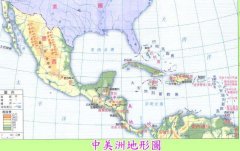
Learn more about the description of Central American boutique coffee on the coffee map.
Central America is a land bridge connecting North and South America. There are seven countries, namely, Belize, Costa Rica, El Salvador, Guatemala, Honduras, Nicaragua and Panama. Seven Central American countries all produce coffee, with Guatemala, Costa Rica and Honduras among the top 10 coffee exporters in the world. Coffee started in Central America in the 18th century, an important economy.

Coffee beans Indonesia Java coffee latest introduction
Among the coffee-producing Asian countries, Indonesia is one of the most noteworthy. Indonesia is an island country in the Indian Ocean, with islands on either side of the equator, three of which: Java, Sumatra and Surawesi produce globally important coffee. In the mid-17th century, the Dutch brought coffee trees to Ceylon (Sri Lanka) and Java in Indonesia. 18th century, India

Introduction to the present situation of taste and flavor of Kenyan coffee
Kenyan Coffee, the origin editor, entered Kenya in the 19th century, when Ethiopian coffee drinks were imported to Kenya through South Yemen. But it was not until the early 20th century that the bourbon was introduced by the St. Austen Mission (St.AustinMission). Kenyan coffee is mostly grown at an altitude of 1500m, 2100m, and is harvested twice a year. To ensure that only

What are the characteristics of Salvadoran sun-made coffee? a brief introduction to the taste of Salvadoran coffee
Professional coffee knowledge exchange more coffee bean information please follow the coffee workshop (Wechat official account cafe_style) the front street of Salvadoran sun-dried Pacamara coffee the fate of the coffee industry is closely linked to El Salvador's national fortune. Before coffee was grown in large quantities, El Salvador's economic exports depended mainly on indigo dyes, which had to be converted because of the invention of chemical dyes in the mid-19th century.

Burundian Coffee Flavor with Fruit Flavor; introduction to the characteristics of fine coffee beans in the manor area
Formerly known as Urundi, Burundi formed a feudal kingdom in the 16th century. Since the middle of the 19th century, the forces of Britain, Germany and Belgium invaded. The long-ruled monarchy, which was conquered by Germany in 1890, listed it as the territory of German East Africa and fell under the control of the Belgian army in 1916. After World War I, the League of Nations merged Rwanda-

A brief introduction to the History and Culture of the Origin and Development of Fine Coffee in Berman Manor, Kenya
Coffee entered Kenya in the 19th century, when Ethiopian coffee drinks were imported into Kenya from southern Yemen. But it was not until the early 20th century that the bourbon was introduced by the St. Austen Mission. Kenyan coffee is mostly grown at 15002100 meters above sea level and is harvested twice a year. Kenyan industrious people love coffee as much as lovers in love. Jim Ken

A brief introduction to the Market Price of Coffee varieties in Yinshan Manor, Fine Coffee Manor in Jamaica
Cup test features: a perfect and delicate balance of acidity, mellow thickness and aroma. Its acidity is bright and delicate. Its body is as smooth as velvet. Silver Mountain Manor Coffee has a slightly penetrating aroma, accompanied by floral, spicy, and citric acid tones. There is a hint of cocoa after the entrance. The house in Clifton Hill Village, during the 19th century, in the Royal Mountains and Blue Mountains of Hong Kong.

A brief introduction to the Flavor of Fine Coffee producing areas in Kenya comparison of flavors in different producing areas in Kenya
Professional baristas please pay attention to the coffee workshop (Wechat official account cafe_style) Kenya Coffee to the north is adjacent to Ethiopia, the origin of Arabica coffee trees, but it was not until the beginning of the 20th century that coffee cultivation began. In the 19th century, missionaries introduced Arabica trees from Yemen, but did not plant a large number of them. It was not until 1893 that Brazil's ancient bourbon coffee seeds were introduced.
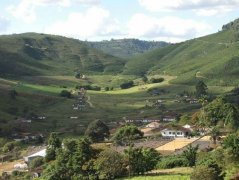
A detailed introduction to the cultivation of Coffee Manors in Central America
Central America knows Central America Coffee Central America is the land bridge connecting North and South America. There are seven countries, namely, Belize, Costa Rica, El Salvador, Guatemala, Honduras, Nicaragua and Panama. Seven Central American countries all produce coffee, with Guatemala, Costa Rica and Honduras among the top 10 coffee exporters in the world. Coffee began to flourish in Central America

Introduction of Coffee Origin-Asian "Sri Lanka, Bali, Yunnan, China"
For professional baristas, please follow the coffee workshop (Wechat official account cafe_style) Sri Lanka, formerly known as Ceylon. Sri Lankan black tea and Ceylon black tea refer to the same thing. In 1658, the Dutch grew coffee in Ceylon (present-day Sri Lanka), but the coffee was sufficient for economic development until the 19th century. At this time, Britain occupied Ceylon and launched a variety of cash crops.